The NFL Profits From Betting — But Fights to Control Its Risks
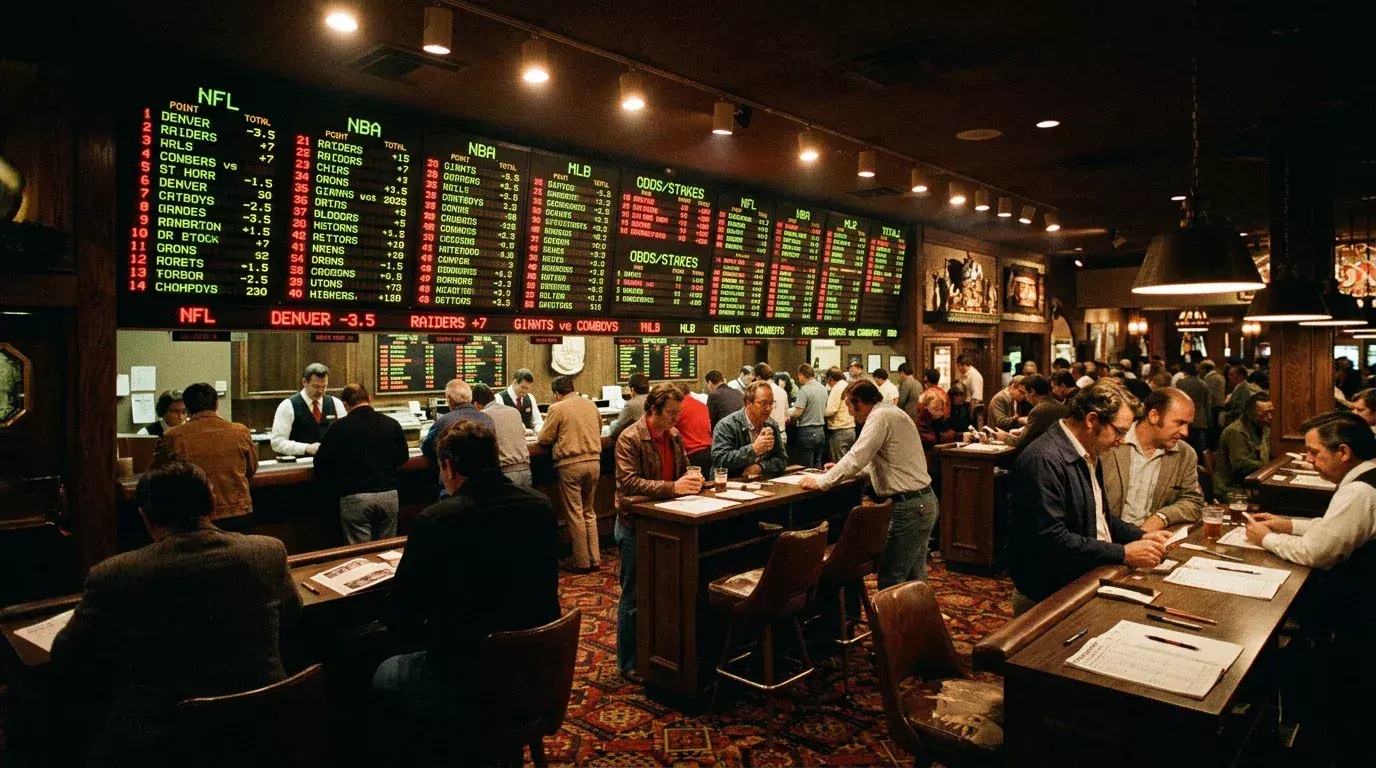
There is an irony at the heart of the NFL’s relationship with sports betting that I find endlessly fascinating. The league’s five-year contracts with its official betting partners, signed from 2021 onward, are worth approximately $1 billion combined. At the same time, the NFL employs an entire division of security personnel whose job is to monitor those very partners’ markets for signs that the integrity of the sport has been compromised. The money flows in one direction while the suspicion flows in the other, and both are growing.
This tension is not unique to the NFL, but it is amplified by the scale of the league’s betting handle. With roughly $30 billion wagered legally on NFL games each season in the US alone, the financial incentive for manipulation — even at the margins — is enormous. The league’s response has been to invest heavily in monitoring infrastructure while publicly advocating for market restrictions that would, if implemented, reduce the very revenue its betting partnerships generate.
See also: UK gambling regulation for NFL betting.
Player Gambling Suspensions: The 2023 Wave and Its Aftermath
The spring of 2023 was the NFL’s worst moment in the betting integrity era. Ten players were suspended for violating the league’s gambling policy, including several who placed bets on NFL games from inside team facilities. The names ranged from fringe roster players to starters, and the geographic spread covered multiple teams. It was not a single ring or conspiracy — it was a pattern of casual, often careless violations that revealed how normalised sports betting had become in the lives of the very athletes whose performances the bets targeted.
The violations varied in severity. Some players bet on NFL games involving their own teams. Others bet on other NFL games but did so from team premises, which the league’s policy explicitly prohibits regardless of the game involved. The fact that the bets were placed through legal, regulated sportsbook accounts is what made detection possible — account verification, geolocation data, and transaction records allowed the league’s security team to identify the violations with precision.
Since the 2023 suspensions, no additional players have been sanctioned for gambling violations. Whether that reflects improved compliance, better education programmes, or simply a shift from legal accounts to untracked methods is impossible to determine from the outside. What is clear is that the 2023 wave created a deterrent effect: the suspensions cost players game cheques, endorsement opportunities, and reputational standing. For a league minimum player, a multi-game suspension represents a six-figure financial penalty, which is enough to change behaviour even if the moral argument does not.
The November 2025 Prop Bet Memo and Its Industry Impact
The NFL’s November 2025 memorandum escalated the league’s public stance on prop betting from cautious concern to active opposition. The memo described certain categories of player prop bets as having a “corrosive effect” on the sport and called for restrictions on markets where individual player performance statistics could be directly influenced by a single person. Jeff Miller, the NFL’s Executive Vice President, had previously expressed concern about prediction markets operating without the safeguards imposed by state regulatory authorities, and the memo extended that logic to traditional prop markets as well.
The industry reaction was split. Sportsbook operators publicly emphasised their monitoring capabilities and responsible practices while privately acknowledging that prop markets — particularly low-threshold player props — generated substantial revenue they were reluctant to surrender. Regulators in several US states began reviewing whether prop bet categories should be restricted, though no major jurisdiction had implemented changes by early 2026.
In the UK, the UKGC’s existing framework already provides a different regulatory context. UK-licensed operators are required to monitor market integrity and report suspicious activity, but the specific prop bet restrictions the NFL has advocated in the US have no direct parallel in British regulation. The UKGC’s approach has been market-neutral: it regulates the operator’s behaviour rather than prescribing which markets can be offered. Whether that approach is sufficient as NFL prop betting volume grows in the UK is an open question that British regulators have not yet addressed publicly.
See also: nfl betting statistics — integrity.
UKGC Affordability Checks and NFL Betting in Britain
For UK-based NFL bettors, the regulatory development with the most direct personal impact is the UKGC’s affordability checking framework. Introduced in phases, these checks trigger when a customer’s net losses exceed £125 within a 30-day period or £500 within a 12-month period. Once triggered, the operator must conduct enhanced due diligence on the customer’s financial situation before allowing continued betting at the same level.
The thresholds are low enough that an active NFL bettor can reach them within a few weeks of moderate play. A bettor placing two to three spread bets per week at £20—£30 each, experiencing normal variance, could hit the £125 monthly trigger in the first fortnight of the season. The consequence is not account closure but additional friction — document requests, verification delays, and potential stake limitations while the review is processed. For a sport with a compressed 18-week regular season, even a two-week delay can mean missing critical game weeks that do not come back.
The UKGC’s regulatory posture reflects broader societal priorities: 15% of British men and 4% of British women participate in sports betting, and the Commission’s mandate centres on preventing harm within that population. The affordability framework was designed primarily with football-focused bettors in mind — punters placing multiple bets across a full Premier League weekend. Whether it calibrates correctly for the concentrated, lower-frequency pattern of an NFL-focused bettor placing two to four wagers per week on a single sport remains an open question in the regulatory conversation.
The full scope of how these checks interact with NFL betting patterns and broader UK regulation is covered in the UKGC regulation guide, which breaks down the thresholds, the process, and what bettors can expect when the checks apply to their accounts.