
Ticket Count vs Handle: Two Numbers, Two Different Stories
The first time I looked at NFL public betting data, I made the mistake that nearly every new handicapper makes: I assumed that the percentage of bets on each side was the only number that mattered. If 72% of tickets were on the Chiefs, the public was on the Chiefs, and fading them was the play. It took a painful few weeks to learn that ticket percentage tells you where the crowd is leaning but tells you almost nothing about where the money is going.
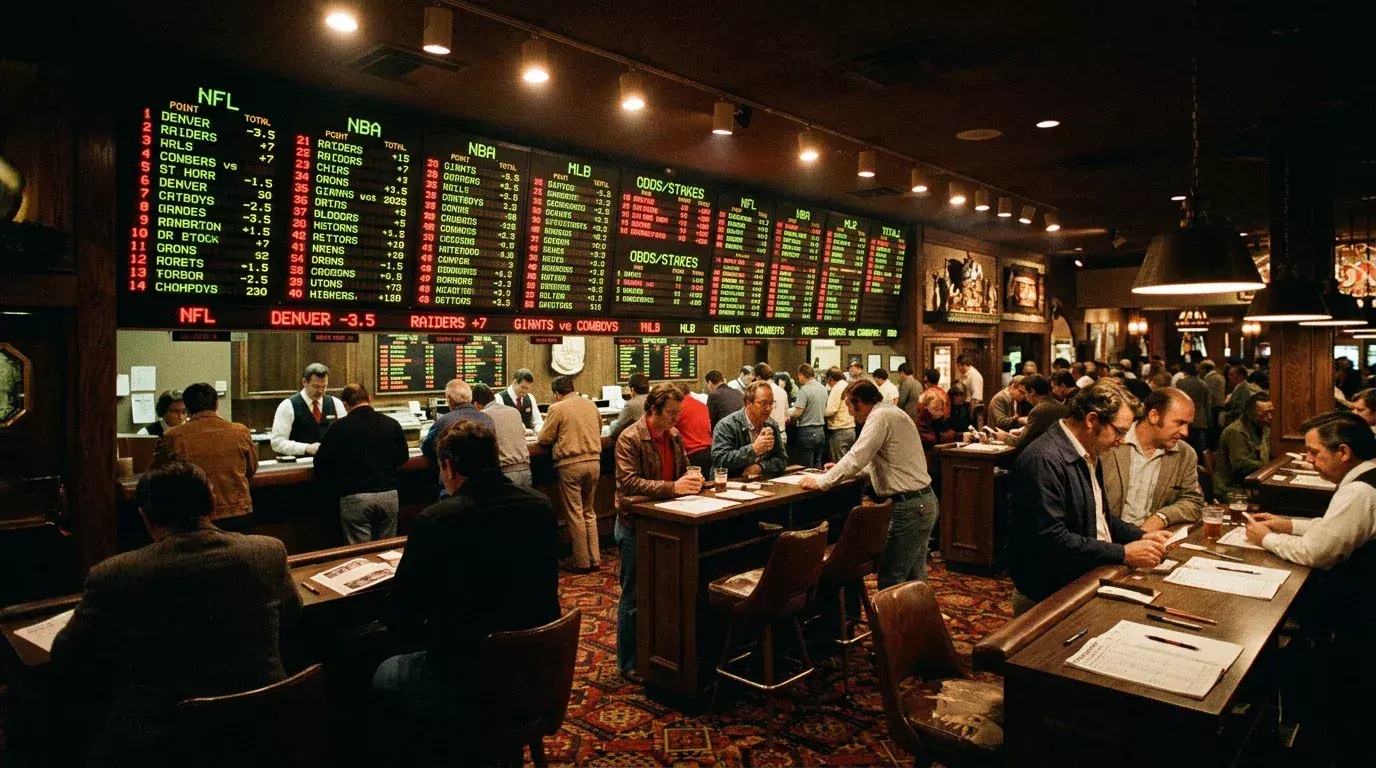
Two metrics define public betting data: ticket percentage and handle percentage. Ticket percentage counts the number of individual bets placed on each side — one ticket per bettor, regardless of stake size. Handle percentage measures the total dollar amount wagered on each side. These two numbers can tell wildly different stories on the same game, and the divergence between them is where the sharpest insight lives.
Consider a game where 75% of tickets are on the favourite but only 55% of the handle. That gap means the majority of individual bettors are backing the favourite, but the minority betting on the underdog are wagering significantly larger amounts per ticket. In the industry, that minority is called “sharp money” — professional or semi-professional bettors who stake large amounts based on quantitative models or sourced information. When the handle percentage doesn’t match the ticket percentage, it’s a signal that informed money disagrees with the crowd.
The public finished the 2025 NFL season with a 145-140 ATS record — narrowly positive, which is unusual. In most seasons the public’s aggregate record is negative, because the vig ensures that betting with the majority is a losing proposition over time. But even in a season where the public technically came out ahead, the distribution of results was revealing: games with lopsided ticket percentages (75% or more on one side) produced more volatile outcomes than games with balanced action. The market is most efficient — and most difficult to beat — when money is split close to evenly.
See also: NFL home field advantage in betting with split stats.
How to Read NFL Public Betting Splits
I spend Sunday mornings checking three things before the early slate kicks off: weather reports, injury updates, and public betting splits. The splits are available from several US-based data providers, and while the exact numbers vary slightly between sources (each platform samples from different sportsbooks), the directional information is consistent enough to be actionable.
Reading the data starts with identifying the baseline. In a typical NFL week, the most popular sides attract 60-70% of tickets. That’s normal. The public gravitates toward favourites, home teams, and franchises with national followings. A game where the favourite is drawing 65% of tickets isn’t telling you anything the market doesn’t already know. The line is set with that public lean in mind, and the sportsbook has already adjusted the spread to account for the expected imbalance.
The signal appears when ticket percentage and handle percentage diverge by ten points or more. If 70% of tickets are on Team A but only 50% of the handle is on Team A, large bets are flowing to Team B. That divergence is what sharp-money trackers call a “steam move indicator” — not a steam move itself, but a precursor that often leads to line movement toward the side with the handle, even though the side with the tickets is more popular. When the line moves against the ticket majority, the sportsbook is responding to the money, not the crowd. That’s the clearest signal the public data can give you.
The total US sports wagering market produced $165.58 billion in handle during 2025, with gross gaming revenue of $16.80 billion and an overall hold rate of 10.15%. Those macro numbers frame the scale of money flowing through NFL markets every week. Even a small percentage of that total directed by sharp bettors is enough to move lines — and the public betting splits are the instrument that lets you see which direction the smart money is pushing.
One important caveat: the splits available to the public are delayed and sampled. You’re not seeing real-time data from every sportsbook in the market. You’re seeing an approximation, typically updated every few hours, drawn from a subset of operators. The directional signal is useful, but treating it as a precise, live measure of market sentiment would be overreading the data. Use it as one input in a broader framework, not as a standalone system.
The Fade-the-Public Strategy: When It Works and When It Fails
Fading the public is the oldest contrarian strategy in sports betting, and its appeal is obvious: if most bettors lose, doing the opposite of what most bettors do should win. The logic sounds airtight. The reality is more complicated.
The strategy works best when three conditions align simultaneously. First, the ticket percentage must be heavily skewed — 75% or more on one side. Moderate leans of 60-65% don’t generate enough line movement to create exploitable mispricing. Second, the handle percentage must be closer to even or tilted toward the opposite side. This confirms that the ticket lean is driven by small-stake recreational bettors rather than broad market consensus. Third, the line must have moved toward the popular side, not away from it. If the sportsbook has moved the spread in the direction of the ticket majority, it means the book is shading the line to attract more balanced money — and the inflated number is where the fade value lives.
When all three conditions are met, the historical performance of the contrarian side is genuinely strong — typically in the 54-57% ATS range across multi-season samples. That’s a meaningful edge against standard vig. The problem is that all three conditions align in only a handful of games per week, and some weeks they don’t align at all. The strategy produces a small number of high-confidence plays rather than a full card of action, which doesn’t suit bettors who want selections on every game.
The strategy fails when the public happens to be right. It sounds obvious, but it’s worth stating: popular teams are popular for a reason. The Chiefs, the Eagles, the Bills — these teams attract public money because they’re genuinely good. Fading them purely because they’re popular, without considering whether the spread is actually inflated, is contrarianism for its own sake. The market isn’t always wrong about which side is better. It’s sometimes wrong about how much better they are, and the fade-the-public approach only captures value in the second scenario.
My approach is to use public betting data as a filter, not a trigger. I flag games where the splits meet the three criteria above and then run my own analysis on whether the line is mispriced. If my model agrees with the contrarian side, I bet it with higher confidence. If my model disagrees, I pass. The data doesn’t make decisions — it narrows the field of decisions I need to make.
NFL Betting Handle by State and the UK Dimension
NFL betting handle in the United States is concentrated in a handful of states. New York, New Jersey, Illinois, Pennsylvania, and Ohio typically account for the majority of nationwide NFL wagering, driven by population density, mature regulatory frameworks, and the presence of multiple licensed operators competing for market share. The geographic distribution of handle matters because it affects which games attract the most action and, by extension, which lines are most efficiently priced.
Games involving teams from high-handle states tend to have sharper closing lines because the volume of money flowing through those markets forces the number to its most accurate level by kickoff. A Giants-Eagles game draws enormous handle from the New York and Pennsylvania markets, and the resulting line is likely to be one of the most efficient on the board. A Jaguars-Titans game, by contrast, draws less total action and may retain more mispricing at close — though the difference is marginal in a market as mature as NFL betting.
The UK dimension adds a layer that most American analysis ignores entirely. Fifteen percent of men and 4% of women in Britain bet on sports, and 95% of online wagers are placed from home — overwhelmingly via mobile devices, with 76% of 18-to-24-year-old bettors using phones. That demographic profile — young, mobile-first, betting from the sofa — mirrors the profile of the US bettor who drives NFL parlay and SGP volume. The difference is that UK bettors are operating within a regulatory framework (the UKGC) that is substantially different from any US state regime, with affordability checks, deposit limits, and advertising restrictions that shape betting behaviour in ways the US market doesn’t experience.
For practical purposes, UK bettors tracking American public betting data should understand that the splits they’re seeing reflect US market sentiment, not global sentiment. The UK handle on NFL games, while growing rapidly, is still a fraction of the US total and doesn’t meaningfully influence the primary line. You’re reading a signal generated by a market you’re adjacent to but not part of — which is actually an advantage, because it means you can observe the crowd’s behaviour without being swept up in it.
Live Betting Splits: How In-Play Action Shifts the Numbers
Pre-game splits get all the attention, but the fastest-growing segment of NFL wagering is in-play, and the public betting dynamics during a live game are fundamentally different from those before kickoff.
In pre-game markets, bettors have hours or days to analyse the line, read public data, and make a decision. The process is relatively deliberate, and the resulting ticket-to-handle splits reflect considered (if not always informed) opinions. In-play markets operate on a different clock. Decisions are made in seconds, often in response to what just happened on the field — a touchdown, a turnover, an injury. The cognitive biases that drive pre-game public betting (favourite bias, recency bias, brand loyalty) are amplified during live betting because there’s no time for the analytical override that might temper them.
The result is that in-play public money tends to be even more one-directional than pre-game money. When a team scores, live bettors pile onto that team’s next spread or moneyline, creating a ticket lean that can exceed 80% within minutes. Sportsbooks adjust the live line rapidly — algorithmic pricing updates every few seconds during play — but the adjustment often overshoots in the moments immediately following a scoring play, creating fleeting windows of value on the opposite side.
Tracking live splits in real time is difficult. The data infrastructure for in-play public betting percentages is less developed than for pre-game markets, and most free tools update on a delay that renders the information stale by the time you see it. Professional live bettors use direct feeds and automated systems to capture these windows. For retail bettors, the more practical approach is to understand the directional bias — the public chases momentum in live markets — and use that understanding to stay disciplined rather than react emotionally when the game shifts. For a full breakdown of in-play value identification, I’ve covered the topic in NFL sharp money indicators.