
Reverse Line Movement: The Primary Sharp Indicator
Reverse line movement is the single most discussed sharp-money signal, and it deserves the attention. The concept is simple: when the majority of public tickets land on one side of a spread but the line moves in the opposite direction, something is pulling the number away from the crowd. That something is almost always large, sharp wagers on the less popular side.
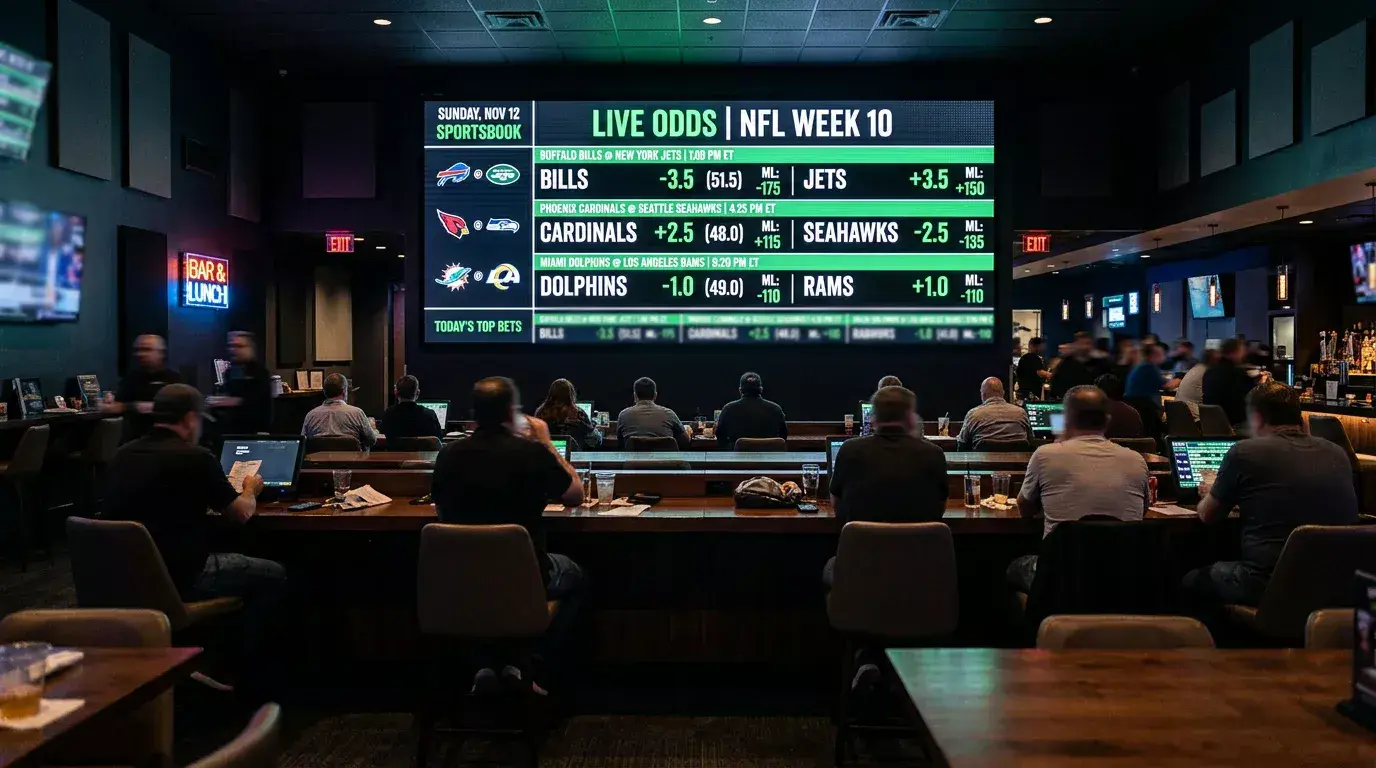
Here is a concrete example from the 2025 season. A Week 6 matchup opened with the home team as a 3-point favourite. By Saturday evening, 68% of tickets were on the favourite, but the line had moved from -3 to -2.5. The public was backing the favourite, yet the sportsbook moved the line toward the underdog. The most plausible explanation is that a smaller number of high-dollar wagers on the underdog created enough liability exposure to force the adjustment. Those high-dollar wagers came from accounts flagged as sharp — professional bettors whose historical accuracy justified the sportsbook’s willingness to move the line in their direction.
The total US sports betting handle reached $165.58 billion in 2025, with a gross gaming revenue of $16.80 billion. Within that volume, the disparity between ticket count and handle distribution is the key metric. A game where 65% of tickets are on the favourite but only 45% of the handle is on the favourite tells you that a small number of large bets are on the underdog. When that handle imbalance coincides with line movement toward the underdog, you have a textbook reverse line movement situation.
Not every instance of reverse line movement is a sharp signal. Lines also move when sportsbooks receive private injury information, when weather forecasts change, or when a significant steam move at one book cascades across the market. But when the line moves against public sentiment in the absence of a clear news catalyst, the most reliable explanation is sharp action.
Steam Moves and Syndicate Action on NFL Markets
A steam move is a rapid, coordinated line shift across multiple sportsbooks within a narrow time window — typically sixty to ninety seconds. One book moves first, and within moments, every major operator adjusts to the same number. The speed and synchronisation suggest a single source: a well-funded bettor or syndicate hitting multiple books simultaneously before the first move can propagate.
I witnessed a textbook steam move during Week 12 of the 2025 season. An underdog opened at +6.5 across all major US books. At approximately 11:15 AM Eastern on Sunday, the line at one offshore operator dropped to +5.5. Within ninety seconds, three US books had moved to +6, and by kickoff the consensus was +5.5. The total public ticket percentage on the favourite remained above 70% throughout. The only plausible driver was a coordinated sharp play that overwhelmed the market in a window too narrow for recreational bettors to have caused the shift.
Steam moves are less common than reverse line movement but carry higher conviction. When a syndicate risks significant capital across multiple books on a single play, the implied confidence level is substantial. Tracking steam moves requires access to real-time odds data from multiple sources, which is where the practical challenge lies for most bettors — by the time you see the move, the value has already been captured.
The actionable lesson is not to chase steam moves after the fact. It is to use them as confirmation. If your own analysis points to a particular side and a steam move subsequently supports that position, the convergence of independent signals strengthens the case. If a steam move goes against your position, it is worth reconsidering the bet rather than dismissing the market’s signal.
See also: nfl betting statistics — sharp money.
Where UK Bettors Can Track Sharp Money Signals
The tools available to US-based bettors for tracking sharp action — real-time ticket and handle splits, live line movement trackers, and alerts for reverse line movement — are largely accessible to UK bettors as well, though the user experience is not always designed with international users in mind. Several US-focused analytics platforms publish free or subscription-based data on public betting percentages, handle distributions, and line movement histories that UK punters can use to identify sharp signals on NFL markets.
The limitation is that UK sportsbook lines do not always move in lockstep with US consensus lines. A sharp-triggered move at a major US operator may take minutes or hours to propagate to UK books, and in some cases the UK line may not move at all if the operator’s NFL liability is small enough that the sharp US action does not affect their risk position. For UK bettors, this latency creates opportunity: if you identify a sharp-backed side through US data and find that your UK book has not yet adjusted, the intervening window is where value sits.
The broader framework of how public and sharp money interact across the full NFL season is covered in the public betting percentages analysis, which maps ticket-versus-handle dynamics and their historical ATS implications.