
The Shrinking Edge That Still Moves Every Line
In 2003, home teams won 57.3% of NFL regular-season games. In 2025, that figure sat closer to 53%. The decline has been gradual, persistent, and consequential for every bettor who prices home-field advantage into their models. Yet oddsmakers still build 1.5 to 2.5 points of home-field advantage into every spread, and the question worth asking is whether that adjustment still reflects reality or whether the market is clinging to a fading signal.
I have been tracking home-field advantage as a standalone variable since 2016, and the trend line points in one direction: down. The causes are structural rather than cyclical. Improved travel logistics, standardised playing surfaces, advanced noise-cancellation communication systems in helmets, and the league’s competitive balance mechanisms have collectively eroded the advantages that home teams once enjoyed. The crowd still matters, but it matters less than it did a generation ago.
See also: NFL splits data for home and away breakdowns.
Measuring the Modern Home-Field Edge in Points
The traditional estimate of home-field advantage — 3 points baked into the spread — dates to an era when the NFL was a fundamentally different sport. By 2020, most sharp models had revised that estimate downward to 2.0—2.5 points. By 2025, the best estimates I have seen place the league-wide average at approximately 1.3—1.8 points, with significant variation by team and stadium.
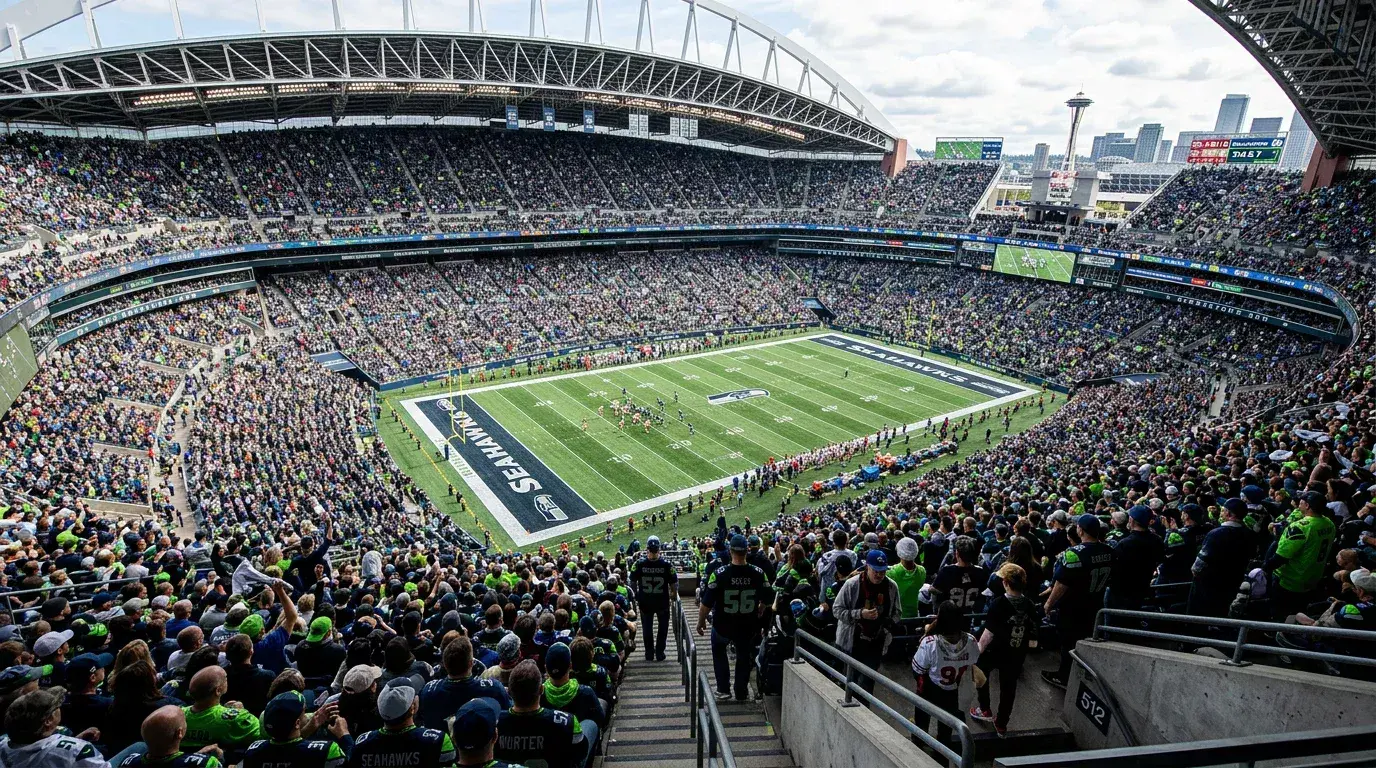
That variation matters more than the average. The Seattle Seahawks’ home-field advantage at Lumen Field, with its distinctive crowd noise amplification, is measurably higher than the league average. The Denver Broncos benefit from altitude adjustment — visiting teams from sea level experience reduced aerobic capacity that affects late-game performance. The Green Bay Packers’ Lambeau Field produces a cold-weather penalty for visiting teams from warm-weather cities in December and January. These stadium-specific factors mean that a flat 1.5-point home-field adjustment is simultaneously too high for some venues and too low for others.
The 2025 data added nuance to the picture. Flutter’s SEC filing noted the highest favourite win rate in roughly two decades, and since home teams are more frequently favoured, the elevated favourite win rate partially reflected a strong year for home-field performance. One season does not reverse a two-decade trend, but it does highlight that home-field advantage fluctuates year to year within its long-term decline.
Why Home-Field Advantage Has Declined
The erosion has multiple causes, and understanding each one helps a bettor calibrate how much weight to give the home factor in different situations.
Travel is the most cited factor, and it is the least interesting. Modern NFL teams fly on chartered jets, stay in premium hotels, and arrive in the visiting city 24—36 hours before kickoff. The physical toll of travel is negligible for a same-time-zone trip and modest even for coast-to-coast journeys. The travel advantage that once existed — when teams flew commercial, arrived the morning of the game, and played in unfamiliar time zones without adequate rest — is largely extinct.
Communication technology has been more impactful. In the 1990s, crowd noise disrupted offensive audibles and forced visiting quarterbacks to rely on silent counts. Today, helmet communication systems allow the coaching staff to transmit plays directly to the quarterback until 15 seconds remain on the play clock. The visiting quarterback still faces crowd noise, but the information disadvantage is dramatically smaller than it was before modern communication technology.
Playing surface standardisation eliminated another historical advantage. When some teams played on natural grass and others on artificial turf, visiting teams had to adjust to unfamiliar footing. The NFL now mandates minimum surface quality standards, and the practical difference between playing surfaces has narrowed to the point of irrelevance for most matchups.
See also: nfl betting statistics — home field advantage.
Stadiums Where Home-Field Still Carries Weight
Despite the overall decline, certain stadiums continue to produce home-field advantages that exceed the league average. The common thread is an environmental factor that technology and logistics cannot neutralise.
Denver’s altitude is the most reliable. Visiting teams, particularly those from sea level, show measurable fourth-quarter performance declines at Mile High. The effect is strongest in September, when the heat and altitude combine, and weakest in December, when cold temperatures partially offset the altitude factor. ATS data over the past decade shows Denver home favourites covering at a rate approximately 3%—4% above the league average for home favourites, with the edge concentrated in the fourth quarter.
Seattle and New Orleans produce crowd-noise effects that remain meaningful. Both stadiums have architectural features that amplify noise beyond what typical outdoor or indoor venues generate. The false-start penalty rate for visiting offences at Lumen Field and the Caesars Superdome exceeds the league road-game average by a statistically significant margin. False starts do not directly win games, but they create second-and-long and third-and-long situations that favour the home defence.
The weather-dependent stadiums — Green Bay, Buffalo, Chicago — produce situational home-field advantages that emerge in late-season games when temperature differentials between the home team’s training environment and the visiting team’s home climate create a conditioning gap. A Jacksonville team accustomed to practising in 20-degree Celsius weather that visits Green Bay in a -15-degree Celsius December game faces a physical adjustment the Packers do not.
Pricing Home-Field into Your NFL Betting Model
The practical question for bettors: how should home-field advantage factor into spread analysis? My approach is to use a tiered system rather than a flat adjustment. League-average home-field advantage gets 1.5 points. Dome teams hosting outdoor-climate visitors get a 0.5-point boost. Altitude, extreme noise, and late-season weather stadiums get a further 0.5—1.0 points. Neutral-site games — including the London International Series fixtures — get zero home-field adjustment.
This tiered system produces different projections than a flat 2.5-point or 3-point home-field adjustment, and those differences translate to actionable betting opportunities. When the market prices a game with a flat home-field assumption and the actual advantage is higher or lower, the spread is off by 0.5 to 1.0 points — enough to change a bet from negative to positive expected value on games near key numbers.
The broader lesson from two decades of declining home-field advantage is that the market adjusts, but slowly. The 3-point era lasted from the 1990s into the 2010s even as the actual advantage was shrinking. The current 1.5—2.5-point era is likely to persist even as the true advantage continues to drift downward. That lag between reality and market pricing is where the edge lives.