
The Bet Slip in Your Pocket Changed Everything
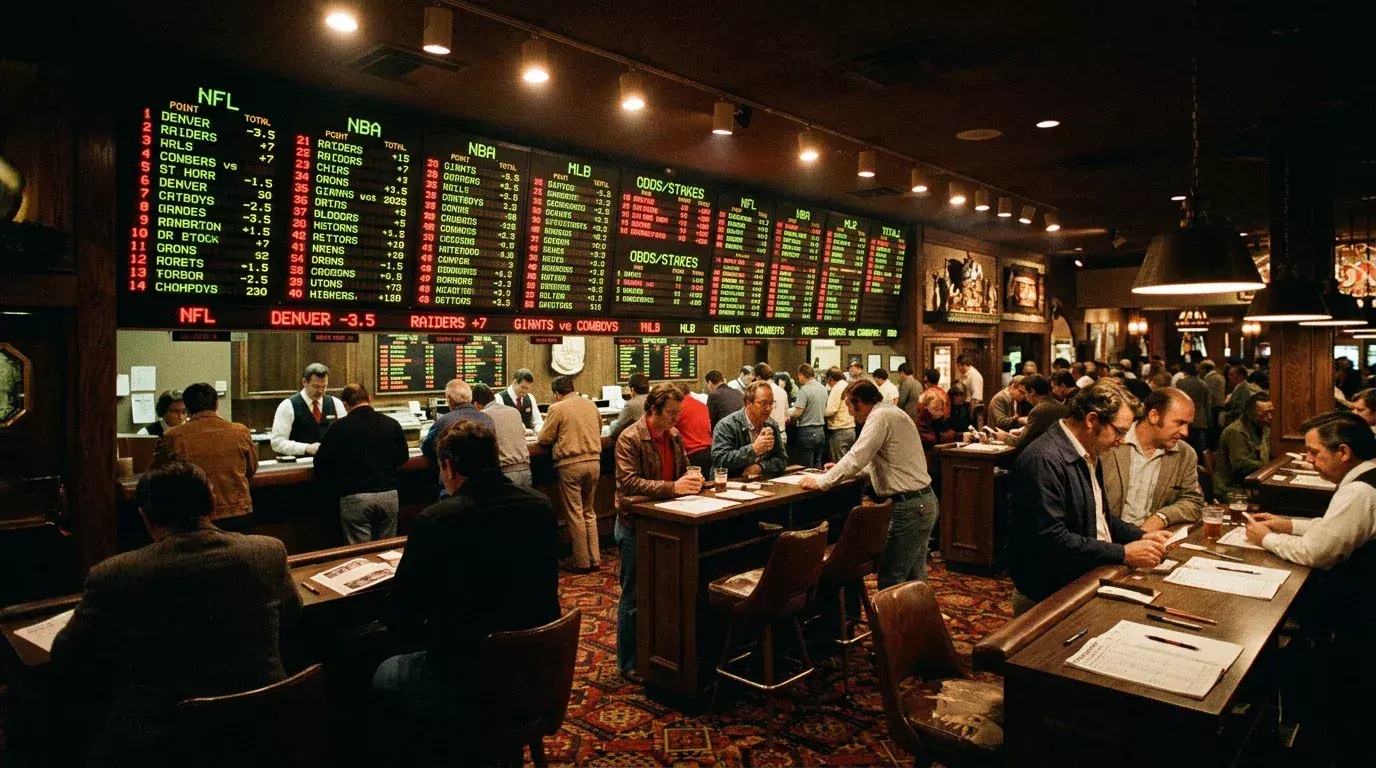
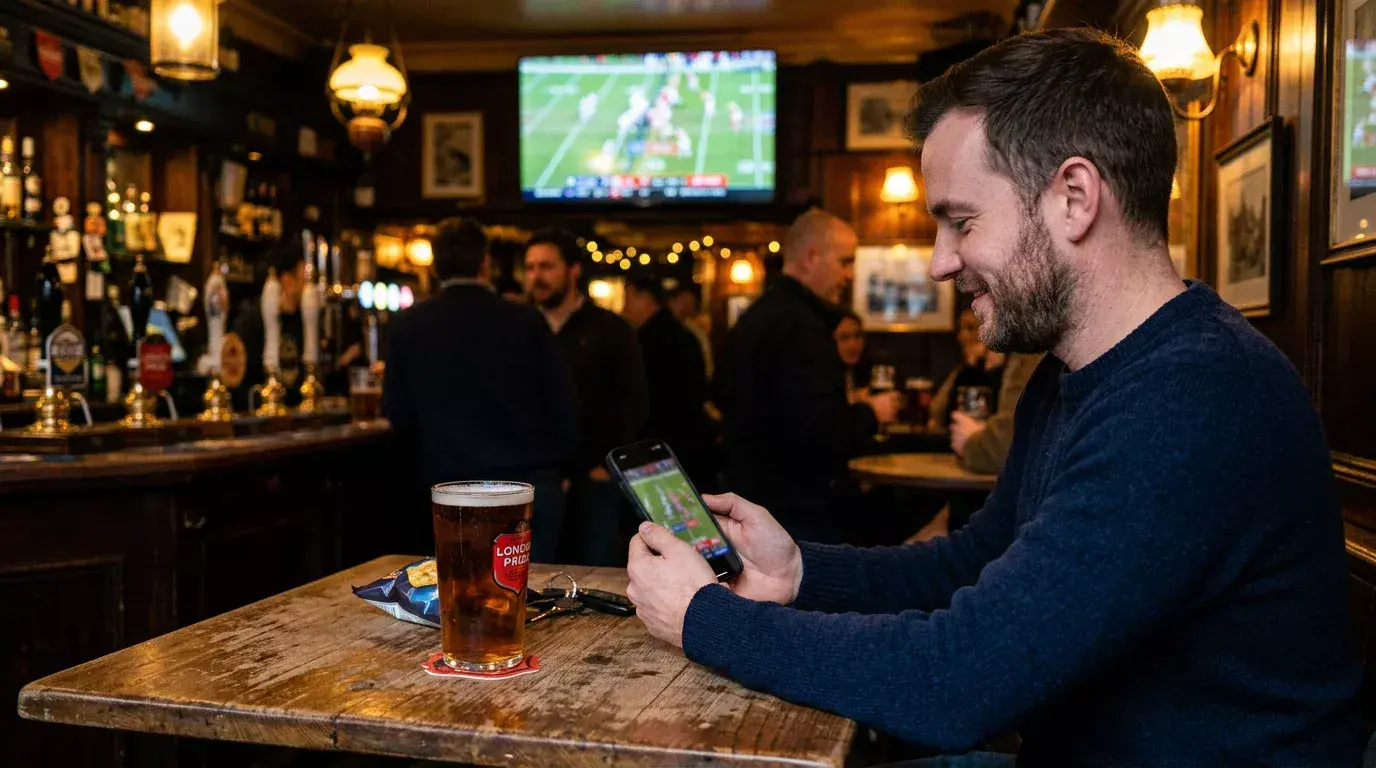
I placed my first NFL bet from a desktop computer in 2016, navigating a clunky sportsbook interface while toggling between browser tabs of statistics and injury reports. The process took twenty minutes from analysis to confirmed wager. Last Sunday, I placed a first-half spread bet on the early window while standing in a queue at Tesco. The whole thing — checking the line, reviewing my notes, tapping the bet slip, confirming the stake — took about ninety seconds. That shift from deliberate desktop ritual to casual mobile transaction captures the single most important structural change in UK NFL betting over the past decade.
The numbers confirm what every bettor already feels. Roughly 95% of online sports betting activity in the UK now originates from the home, and among bettors aged 18 to 24, 76% use a mobile phone as their primary device. Desktop betting has not disappeared, but it has been relegated to research and pre-game preparation. The actual placement of the bet — the moment money crosses from account to market — happens on a phone, at a time and place determined by the bettor’s convenience rather than their proximity to a computer.
See also: NFL betting and UK gambling regulation.
How Mobile Access Reshapes NFL Wagering Patterns
Mobile betting does not just change where bets are placed. It changes when they are placed, how many are placed, and what type they are. The UK processes approximately 290 million online bets on real sporting events each month, and the mobile-driven share of that volume has been climbing steadily. For NFL markets specifically, mobile access has produced three measurable shifts in bettor behaviour.
The first is an increase in late betting. When placing a bet required sitting at a desktop, most NFL wagers were placed hours before kickoff — during the Saturday research session or the Sunday morning coffee routine. Mobile access allows bettors to wait until the final injury reports are confirmed, until the inactive lists drop 90 minutes before kickoff, and until late line movement has been absorbed. The result is a compression of betting volume into the final two hours before game time, which makes the closing line more efficient because it incorporates more information than the line that existed six hours earlier.
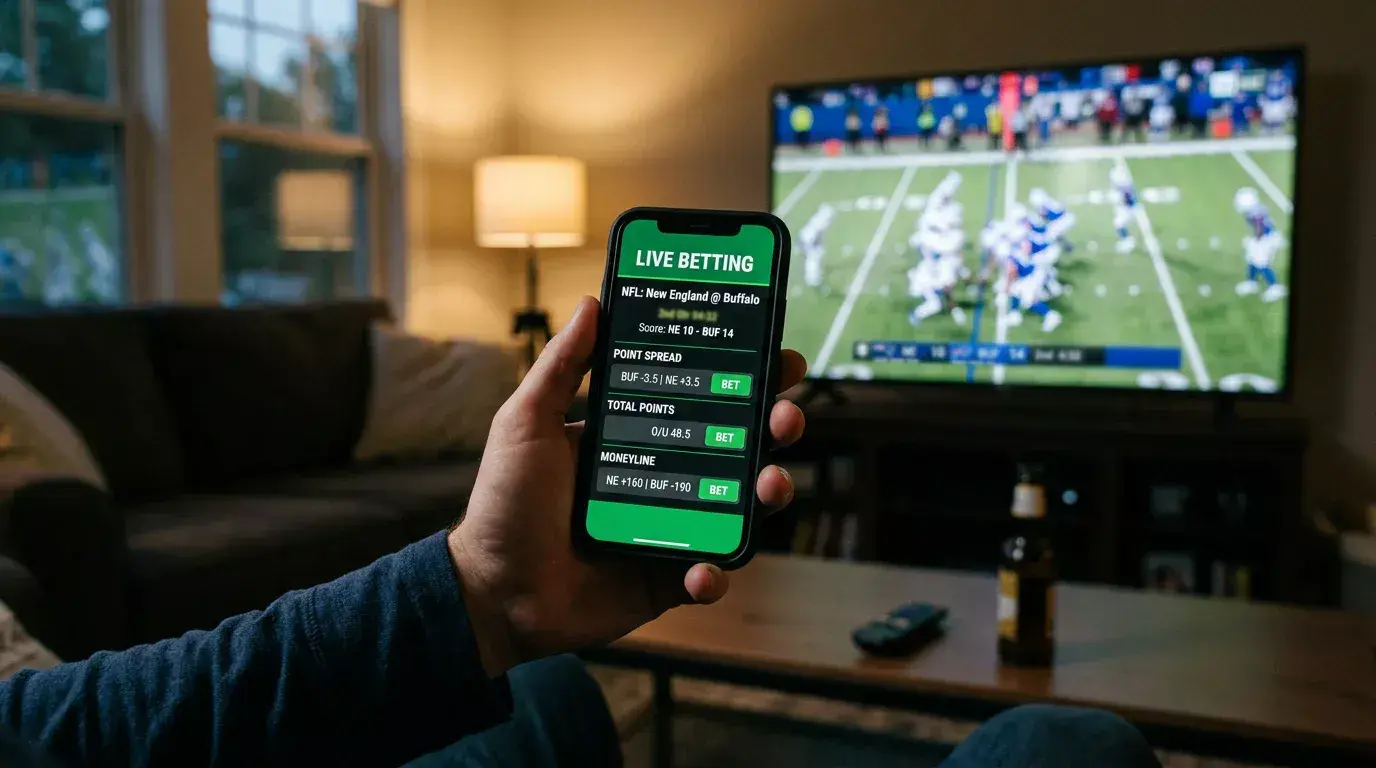
The second shift is toward in-play betting. The NFL’s stop-start format — with breaks between plays, commercial timeouts, and quarter intermissions — is perfectly suited to in-play wagering. Mobile apps present live odds that update with every snap, and the bettor can react to what they are watching in real time. Genius Sports reported 30.4% year-on-year growth in betting technology revenue, driven substantially by the in-play data feeds that power real-time mobile markets. For UK bettors watching NFL games on Sky Sports or the NFL’s streaming platforms, the second screen is no longer a laptop running a spreadsheet — it is the sportsbook app open beside the broadcast.
The third shift is toward micro-stakes, high-frequency betting. Mobile interfaces make it trivially easy to place a bet, and the friction reduction encourages more frequent wagering at lower average stakes. A desktop bettor might place two or three considered bets per NFL Sunday. A mobile bettor with push notifications enabled and a pre-loaded account might place eight to twelve, spanning pre-game spreads, first-half totals, in-play next-score markets, and player prop bets. The per-bet stake is often lower, but the aggregate handle is higher — and the aggregate exposure to the house edge is correspondingly larger.
The App Experience at UK Sportsbooks for NFL Markets
Not all mobile sportsbook experiences are created equal, and for NFL betting specifically, the variance in app quality across UK operators is meaningful. The core differentiators for NFL are market depth, odds presentation, and in-play speed.
Market depth varies substantially. Some UK apps offer 150+ markets per NFL game, including player props, team props, quarter lines, drive props, and same game parlays. Others offer a stripped-down menu of spread, moneyline, and total with a handful of popular player props. For bettors who build their approach around prop analysis or SGP construction, the operator’s mobile market depth determines whether the strategy is executable on the move or requires a fallback to desktop.
Odds presentation matters because NFL odds originate in American format (-110, +150) and must be converted for the UK market. Most British apps display decimal odds by default, with an option to switch to fractional. Some apps handle the conversion cleanly; others introduce rounding that subtly shifts the value. A line priced at -110 in the US market should display as 1.91 in decimal format. An app that rounds to 1.90 has shaved 0.5% off the bettor’s return — a tiny amount per bet that compounds across a season of mobile wagering.
In-play speed is the hardest variable to evaluate but the most consequential for live NFL betting. The delay between a real-world event and the updated odds appearing on the bettor’s screen ranges from two to fifteen seconds depending on the operator’s data-feed infrastructure. A bettor who sees a turnover on the broadcast and taps the live spread within three seconds may get a price that the market has not yet adjusted. A bettor whose app lags by ten seconds will consistently see stale prices that the sportsbook suspends before the bet can be confirmed. The 10% of UK adults who bet on sport are increasingly choosing operators based on in-play responsiveness, and NFL bettors are no exception.
See also: nfl betting statistics — mobile betting trends.
Responsible Gambling Tools in the Mobile Environment
The convenience that makes mobile betting attractive is the same convenience that makes it risky for bettors prone to impulsive behaviour. The UKGC has responded by mandating a suite of responsible gambling tools that all licensed mobile apps must provide: deposit limits, loss limits, session time reminders, reality checks that display net profit or loss at set intervals, and self-exclusion options accessible within the app.
These tools are more important for NFL betting than for football betting, because the NFL schedule concentrates wagering into a narrow weekly window. A Premier League bettor distributes activity across Saturday and Sunday matches, midweek cup games, and European fixtures. An NFL bettor concentrates an entire week’s wagering volume into a six-hour Sunday window plus primetime games on Thursday and Monday. That concentration creates a compressed emotional cycle — wins and losses arriving in rapid succession — that mobile access amplifies by removing every barrier between impulse and action.
The UKGC’s affordability thresholds — net losses exceeding 125 pounds within 30 days triggering enhanced checks — interact with mobile betting in a particular way. A bettor placing multiple small bets across a Sunday afternoon can breach the threshold without realising it, because each individual bet feels insignificant. The cumulative effect only becomes visible when the operator’s affordability check interrupts the account. For bettors who value uninterrupted access throughout the NFL season, proactive use of the app’s deposit-limit and loss-limit tools is not just responsible practice — it is a practical strategy for avoiding the account restrictions that derail mid-season betting plans.
Where Mobile NFL Betting Goes From Here
The trajectory is toward deeper integration between the viewing experience and the wagering interface. Operators are investing in features that link the broadcast feed to the bet slip, allowing bettors to tap a player’s name on a statistics overlay and jump directly to that player’s prop markets. Entain’s 65% year-on-year growth in NFL bettor count reflects a market where the gap between watching and wagering continues to narrow, and mobile technology is the infrastructure that closes it.
For UK bettors, the practical advice is to choose your mobile operator deliberately. The app you use for Premier League betting may not be the best app for NFL betting. Market depth, odds formatting, in-play speed, and responsible gambling tool accessibility all vary by sport and by operator. Evaluate your NFL operator the way you would evaluate any tool in your analytical toolkit — based on how well it serves the specific demands of the market you are betting into, not based on brand familiarity or sign-up bonus offers that carry wagering requirements designed to recapture the promotional cost.