

Why the Playoff Market Plays by Different Rules
The first NFL playoff game I ever bet was a Wild Card matchup in January 2019. I approached it the same way I approached regular-season games — power ratings, ATS trends, injury adjustments. I lost, and not because my analysis was wrong. I lost because I failed to account for the fundamental difference between regular-season and playoff betting markets: the volume of money flowing in from people who had not placed an NFL bet since the previous January.
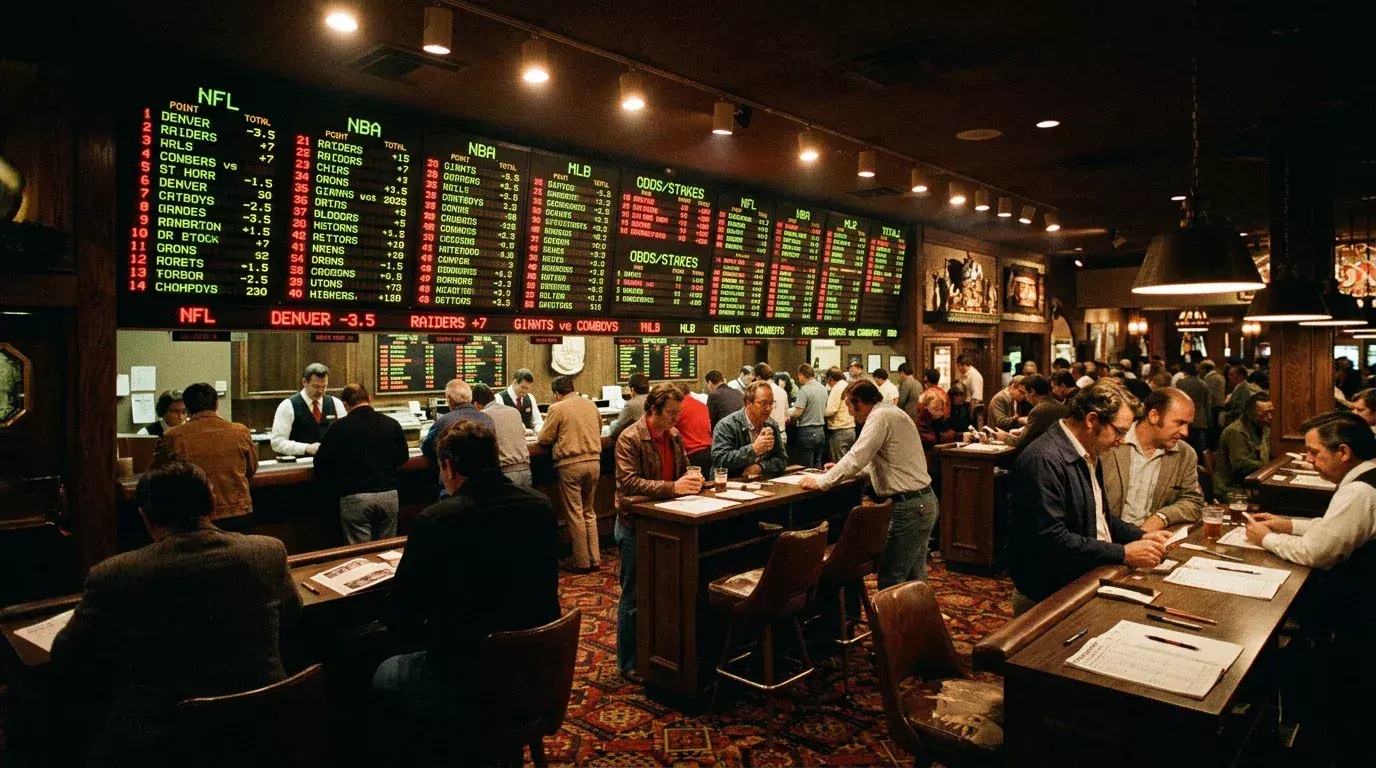
Playoff betting handle spikes dramatically relative to regular-season games. A typical Wild Card Saturday game generates three to five times the handle of a regular-season Sunday afternoon matchup. By the conference championship round, handle per game can reach eight to ten times the regular-season average. The Super Bowl exists in its own category entirely. This flood of casual money reshapes the market in ways that create genuine opportunity for bettors who understand the dynamics.
See also: Super Bowl betting as the playoff finale.
Postseason ATS Records by Round
Not all playoff rounds are created equal from an ATS perspective. Wild Card weekend has historically been the most favourable round for favourites, which makes intuitive sense: the talent gap between a 14-3 division winner hosting a 9-8 Wild Card qualifier is real, and the home-field advantage in January playoff weather amplifies it. Over the past decade, Wild Card favourites have covered at approximately 54%—55%, the highest of any playoff round.
The Divisional Round flips the script. This is where top seeds face their first game action after a bye week, and the rest advantage does not always translate to a cover. Divisional Round underdogs have been the most profitable ATS bet in the NFL postseason over the past fifteen years, covering at roughly 55%—56%. The bye-week rust theory has empirical support: teams coming off a first-round bye have started slowly in the first half of Divisional Round games at a rate that significantly exceeds what regular-season rest patterns would predict.
Conference championships and the Super Bowl occupy a middle ground. These games feature the four best remaining teams, spreads are typically tight, and the market has two weeks of preparation for the Super Bowl and a full week for conference titles. The ATS record in these games hovers near 50%—50%, which is what efficient markets should produce when both sides receive intense scrutiny from sharp bettors and sportsbook traders alike.
Totals Behaviour in Playoff Games
Here is a fact that surprises even experienced bettors: NFL playoff games have gone under the posted total at a higher rate than regular-season games in every single season since 2018. The margin varies — some years it is 55% unders, some years it climbs to 60% — but the direction is consistent. Postseason defence is simply better than regular-season defence, and the market does not fully price this in.
The logic is straightforward. Playoff teams are, by definition, good teams. Good teams in the NFL tend to have strong defences — the correlation between defensive efficiency and playoff qualification is stronger than the correlation between offensive efficiency and playoff qualification. When two top-ten defences meet in a divisional round matchup, the scoring environment is structurally different from a September game between two middling opponents. Oddsmakers adjust totals downward for playoff games, but the adjustment typically falls short of the actual scoring suppression. The total US handle hit $165.58 billion in 2025, and playoff weekends account for a disproportionate share — meaning the under edge exists in one of the most heavily wagered segments of the season.
See also: nfl betting statistics — playoff trends.
The Casual Money Effect on Playoff Lines
During the regular season, the NFL betting market is driven by a mix of sharp money, recreational bettors, and algorithmic models. The balance shifts dramatically in the playoffs. Casual bettors — people who wager on the NFL only during the postseason, if at all — enter the market in force. These bettors disproportionately back favourites, overs, and high-profile teams regardless of the line. The result is predictable: playoff favourites attract a larger share of public money than regular-season favourites, which pushes the line further in the favourite’s direction.
This creates contrarian value on underdogs and unders. The sharps know this, and they wait for the line to move before placing their positions. A Divisional Round line that opens at -3.5 and moves to -4.5 or -5 by kickoff has often been pushed by public money beyond its true value, and the underdog at the inflated number becomes the sharper side. I have found this pattern most reliable in Saturday afternoon games, where casual bettors have the entire morning to place wagers and move the line before kickoff.
For UK bettors, understanding sharp money indicators becomes particularly valuable during the playoff window. The line movement patterns that signal professional money are amplified in the postseason because the casual-to-sharp money ratio is at its most extreme.
Building a Playoff Betting Framework That Accounts for January Variables
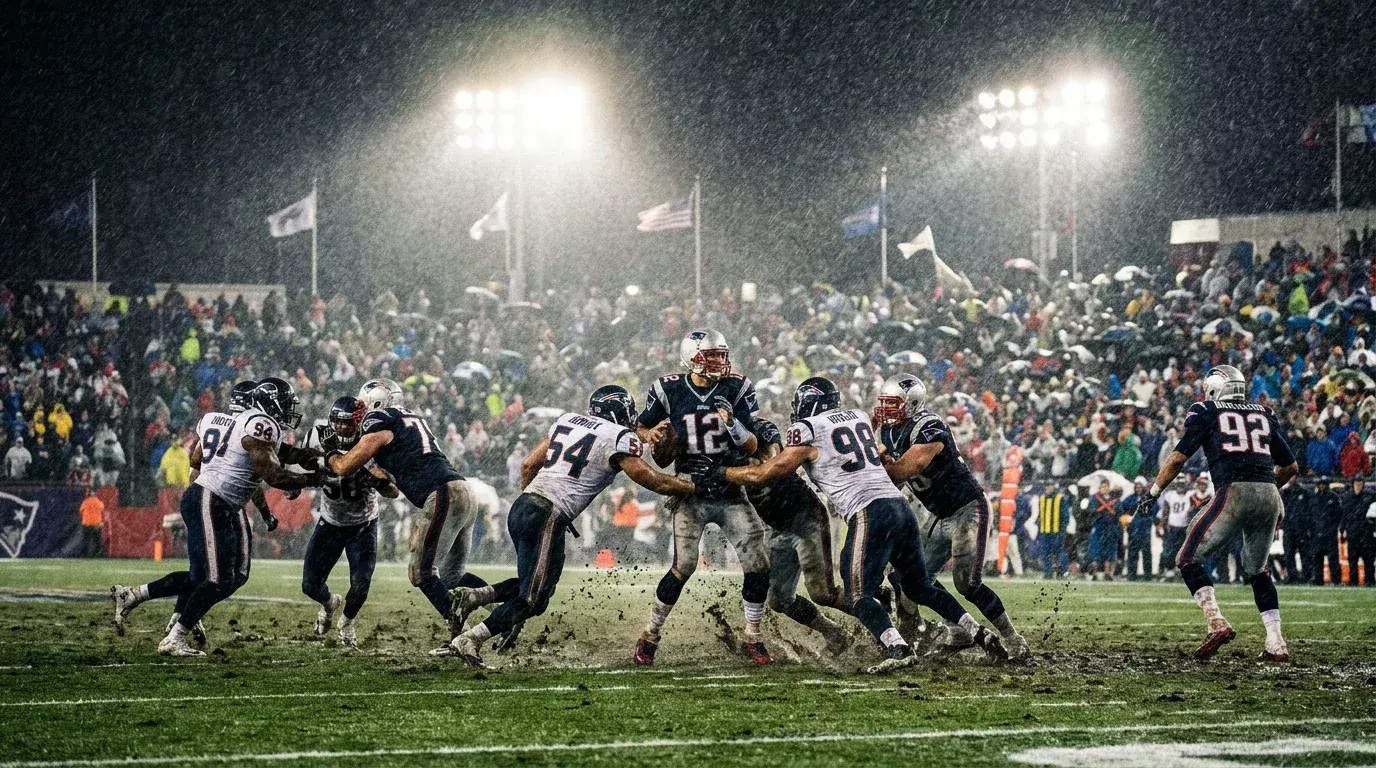
The regular-season model needs adjustment for postseason application. Weather is the first variable: playoff games are played in January and February, often outdoors in northern stadiums. Cold-weather games suppress scoring and increase variance, which benefits underdogs. A 2025 season that Flutter’s SEC filing described as featuring the highest favourite win rate in roughly two decades still produced playoff upsets that confounded regular-season trends.
Motivation and fatigue are the second adjustment. By the conference championship round, teams have played 19 or 20 games. Injuries accumulate, depth is tested, and the physical toll of the NFL season manifests in ways that regular-season data does not capture. A team that dominated the regular season may enter the playoffs with three starters on injured reserve and a starting quarterback playing through an undisclosed injury. The betting line reflects the team’s reputation; the game reflects its current condition.
The practical approach: during the playoffs, weight recent performance more heavily than full-season aggregates, lean toward unders, and treat large spreads with scepticism. The postseason is not the time for aggressive favourite backing. It is the time for disciplined value hunting in a market distorted by the largest influx of casual money the NFL betting calendar produces.