Betting on a Three-Day Guessing Game
The first time I wagered on the NFL Draft, I backed a quarterback to go first overall at 2/5. He did not. A trade reshuffled the top three picks in the final 48 hours before the event, and my locked-in price became worthless. That experience taught me the defining characteristic of draft betting: the market is driven almost entirely by information asymmetry. The people with the best information — the general managers making the picks — are not in the market. Everyone else is guessing based on media reports, mock drafts, and sources of varying reliability.
Draft betting has grown enormously since 2018, mirroring the broader expansion of NFL wagering. The NFL Draft broadcast draws over 12 million viewers across three days, making it one of the most-watched non-game events in American sports. UK interest has grown in parallel — the Draft airs in prime evening hours in Britain, and the combination of genuine suspense and accessible wagering markets has made it a fixture on the British NFL calendar.
See also: NFL futures betting statistics for season-long wagers.
First Overall Pick: The Market Everyone Watches
The first overall pick market is the most liquid and most heavily wagered draft market. It opens months before the draft, typically after the college football season concludes and the draft order begins to crystallise. Early prices reflect the consensus of mock-draft analysts and media insiders. By February, the market has absorbed combine results, pro-day performances, and the first wave of team-source reporting. By April, the closing price on the first overall pick reflects thousands of data points from scouts, journalists, and betting market participants.
The market is efficient at identifying the correct pick roughly 70%—75% of the time when the odds-on favourite is priced at 1/3 or shorter. The inefficiency lives in the other 25%—30% — the years when a trade, a late medical concern, or a front-office change reshuffles the board. In those years, the favourite fails to go first, and bettors who identified the disruption early captured significant value on longer-priced alternatives.
The practical challenge is that these disruptions are genuinely unpredictable. A trade involving the first overall pick is not a statistical pattern you can model — it is a negotiation between two front offices conducted in private. Betting the first overall pick market is closer to political betting than sports betting: it depends on inside information, not analytical models, and the edge goes to bettors with the best media sources rather than the best spreadsheets.
Position and Over/Under Props
Beyond the first pick, draft betting offers a range of position-specific markets: first quarterback drafted, first wide receiver drafted, number of quarterbacks in the first round, total offensive players in the top ten, and dozens of over/under props on individual prospects’ draft positions. These markets are less liquid than the first pick but often more analytically tractable because they depend on positional supply and demand rather than a single binary outcome.
The over/under on a prospect’s draft position is the closest thing to a spread bet that draft markets offer. A player projected to go fifteenth overall might be listed with an over/under of 14.5, and the bettor wagers on whether the player will be selected in the top 14 (under) or 15th or later (over). These markets reward the bettor who understands positional value, team needs, and draft-day trade dynamics. A quarterback-needy team trading up can pull an entire position group earlier than expected, creating cascade effects that move multiple players’ draft slots.
The hold rate on draft props is substantial — typically 8%—15% overround, higher than game-day markets. The $16.80 billion in gross gaming revenue generated by US sportsbooks in 2025 includes draft-period revenue, and operators treat these markets as high-margin entertainment products rather than competitive pricing environments. For UK bettors, the overround on draft props at British operators tends to be even wider than at US books, reflecting the smaller liquidity pool and the operators’ view that draft betting is a novelty rather than a core product.
See also: nfl betting statistics — Draft markets.
Media Leaks, Mock Drafts, and Information Edges
Draft betting is the one NFL market where following the right media figures produces a genuine edge. Mock-draft accuracy varies enormously by analyst. Some consistently nail the top ten with 80%+ accuracy; others produce speculative content designed for clicks rather than predictive value. Building a hierarchy of trusted sources — and tracking their accuracy across multiple drafts — is the closest thing to a systematic handicapping approach that draft betting allows.
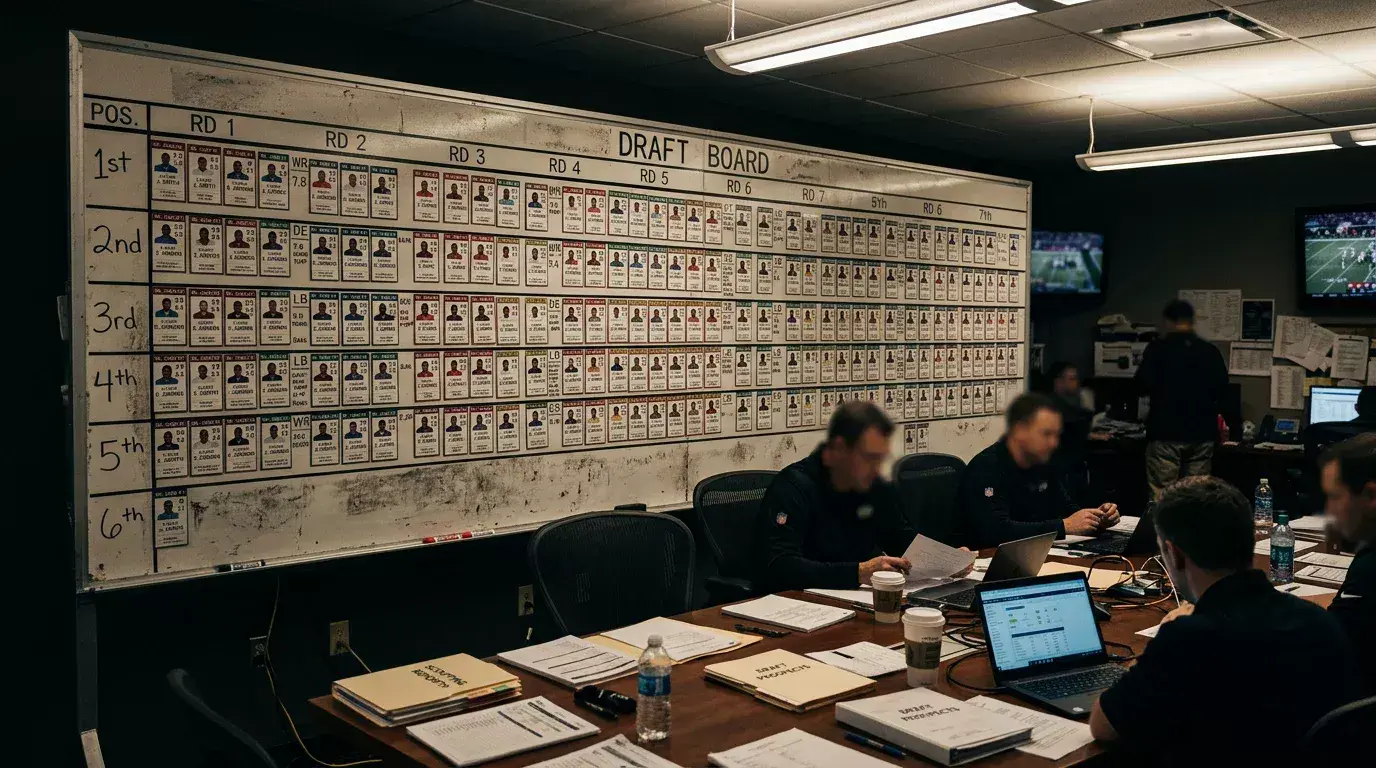
The critical window is the final 72 hours before the draft. This is when teams’ final boards are set, late trades are negotiated, and the most reliable insider reports surface. Line movement during this window is dramatic: a prospect’s over/under can shift by two or three full positions in a single day as credible reporting reshapes market consensus. Bettors who monitor this movement in real time and can distinguish signal from noise in the reporting have a meaningful advantage over those who placed their bets weeks earlier and walked away.
I should note the integrity dimension. The NFL’s concern with betting integrity and player conduct extends to the draft process. The league monitors draft-related betting markets for suspicious activity, particularly around late-breaking line movement that might indicate leaked information from team sources. Ten player suspensions in 2023 for betting-related violations underscored the league’s willingness to enforce its gambling policy aggressively, and that enforcement posture extends to anyone within the NFL orbit who might share non-public draft information for wagering purposes.
Draft Betting as a Bridge for UK NFL Fans
The draft occupies a unique position in the UK NFL calendar. It falls in late April, roughly five months after the Super Bowl and five months before the regular-season opener. For British fans who follow the NFL year-round, the draft is the centrepiece of the offseason — the event that shapes rosters, generates narrative, and provides a reason to engage with the sport during the months when no games are played.
Draft betting serves as a bridge between the end of one season and the start of the next. The markets open in February and close in late April, providing three months of active engagement for bettors who would otherwise have no NFL markets to evaluate. The International Series drew 6.2 million average viewers in 2025, and the growth of that UK audience has expanded demand for year-round NFL content and wagering opportunities. Draft betting meets that demand at a time when no other NFL betting product is available.
The sensible approach is to treat draft betting as a small, entertainment-focused allocation within an overall NFL bankroll. The edges are information-driven rather than analytical, the hold rates are high, and the outcomes depend on private decisions made by 32 front offices operating behind closed doors. Enjoy the theatre, follow the reporting, and size your bets accordingly — but do not expect draft betting to produce the kind of sustained, model-driven edge that regular-season spread betting offers.