One Sunday That Dwarfs Every Other Day on the Calendar
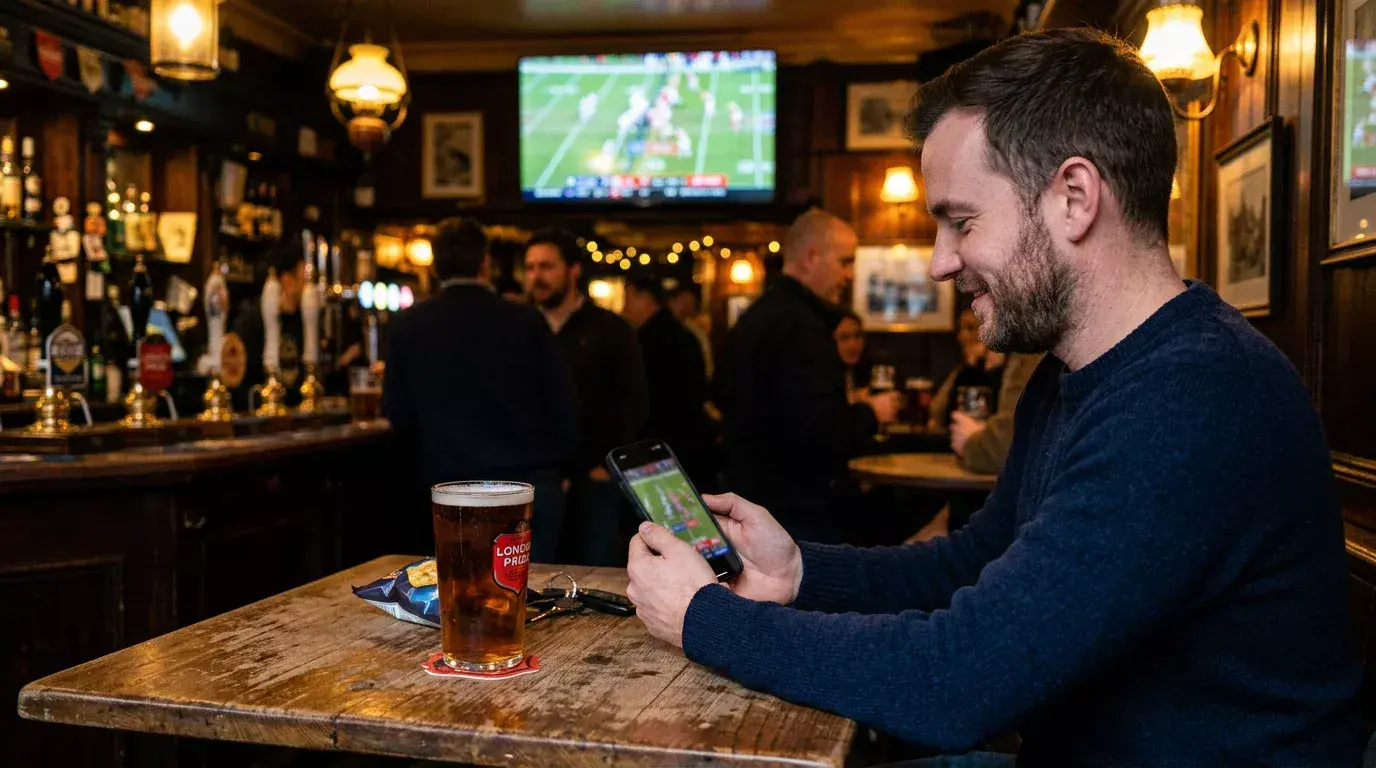
I remember sitting in a pub in Camden during Super Bowl LVII, watching the room split roughly 60-40 in favour of the Chiefs. The interesting part was not who people were cheering for — it was who they had money on. Nearly everyone in that pub had placed at least one bet. Some had spread bets. Some had player props. A few had built same game parlays with four or five legs. One bloke had a novelty bet on the length of the national anthem. That room was a microcosm of what the Super Bowl has become: the single largest betting event in the world, a day when people who never touch a sportsbook the rest of the year suddenly become active participants in the wagering market.
The total US handle on the Super Bowl has shattered records in consecutive years since PASPA’s repeal in 2018. The trajectory is steep — Super Bowl handle has roughly doubled every two years, driven by state-level legalisation, mobile betting access, and the explosion of prop and SGP markets that give casual bettors entry points beyond the traditional spread and total. When the overall US sports betting handle reached $165.58 billion in 2025, the Super Bowl accounted for a disproportionate share of February’s contribution to that figure.
See also: NFL playoff betting trends leading to the big game.
Spread and Totals History in the Big Game
The Super Bowl spread market is the most scrutinised line in sports betting. It opens two weeks before kickoff and moves continuously as sharp money, public money, and information flow push it in both directions. Over the past 25 Super Bowls, the average closing spread has been approximately 3.5 points, reflecting the NFL’s competitive balance at the championship level. Blowouts happen — we have seen double-digit spreads in several recent Super Bowls — but the median outcome is a competitive game decided by a single score.
The ATS record in the Super Bowl skews slightly toward underdogs over the long term. Since 2000, Super Bowl underdogs have covered at approximately 54%—55%, a small but persistent edge that reflects the public’s tendency to overbet the favourite. The Super Bowl attracts more casual money than any other single game, and casual money gravitates toward the perceived stronger team, which pushes the spread beyond its fair value. Sharps accumulate underdog positions over the two-week window, but the volume of public money often overwhelms the sharp-side correction.
Totals in the Super Bowl have trended toward the over in recent years, reversing a long historical lean toward unders. The shift aligns with the NFL’s broader scoring increase and the introduction of more aggressive offensive schemes. The 2025 season produced a 10.15% hold rate across $165.58 billion in handle, and the Super Bowl’s totals market contributed to that figure with the kind of two-sided action that sportsbooks design their pricing around.
The Prop Betting Explosion
Super Bowl prop markets have undergone a transformation that I would not have predicted five years ago. The traditional prop slate — first touchdown scorer, total passing yards for each quarterback, coin-toss result — has expanded into a universe of hundreds of markets per game. Player props now cover every statistical category: rushing attempts, receptions, longest completion, tackles, sacks, interceptions. Team props include first-half scoring, largest lead, total punts, total penalties. Game props extend to overtime probability, safety occurrence, and whether any scoring drive will last fewer than 60 seconds.
The NFL itself recognised the scale of this shift. Jeff Miller, the league’s executive vice-president overseeing partnerships, addressed the growth of prediction markets and prop betting in a November 2025 memo that acknowledged how deeply wagering has integrated with the Super Bowl viewing experience. The memo signalled the league’s comfort with regulated prop markets while drawing a line at any integration with player-level gambling activity — a stance that ten player suspensions in 2023 alone had made necessary.
For UK bettors, Super Bowl props represent both the most entertaining and the least efficient markets on offer. The overround on individual player props at UK sportsbooks is typically 8%—12%, compared to 4%—5% on the main spread. The entertainment value is real — there is nothing quite like sweating a receiving yards prop for a tight end during the biggest game of the year — but the expected value is negative for almost every individual prop bet. The smart approach treats props as entertainment and keeps the serious stake allocation on the main markets.
Handle Distribution and Where the Sharp Money Lands
The two-week gap between the conference championship games and the Super Bowl creates a unique market dynamic. In regular-season games, the line opens on Sunday evening and closes by the following Sunday — a seven-day window. The Super Bowl line lives for fourteen days, which gives sharps far more time to identify and exploit pricing inefficiencies. The result is that the Super Bowl closing line is the most efficient line in all of sports betting. By kickoff, the spread has absorbed more information and more money than any other line in the year.
This efficiency means that beating the Super Bowl spread is harder than beating a typical regular-season spread. The value, if it exists, comes early in the two-week window — in the first 48 to 72 hours after the line opens, before the sharpest money has fully shaped the number. I have tracked Super Bowl opening-to-closing line movement for over a decade, and the pattern is consistent: the line moves 1 to 1.5 points on average between opening and closing, with the majority of that movement occurring in the first three days.
For bettors in the UK, where the Super Bowl kicks off late on a Sunday evening, the timing creates a practical challenge. The line opens during the early hours of Monday morning UK time, two weeks before the game. The sharpest prices are available when most British punters are asleep. By the time the UK market wakes up on Monday morning, the first wave of sharp movement has already occurred. Punters who want the best number need to set alerts and act during unsociable hours — or accept that they are betting into a line that has already incorporated the first round of professional money.
See also: nfl betting statistics — Super Bowl stats.
How the NFL’s Billion-Dollar Partnerships Shape the Super Bowl Betting Ecosystem
The Super Bowl is not just a betting event — it is the showcase for the NFL’s commercial relationship with the regulated wagering industry. The league’s betting partnership contracts exceeded $1 billion in total value, and the Super Bowl is where those partnerships are most visible. Pre-game broadcasts feature odds integrations, in-stadium signage promotes sportsbook partners, and second-screen betting is actively encouraged through the league’s official app.
This commercial integration has a direct effect on handle. The NFL’s promotion of betting during the Super Bowl broadcast normalises wagering for the casual viewer, converting fans into first-time bettors at the highest rate of any single event. Entain’s data shows 65% year-on-year bettor growth on NFL markets and 60% growth in bet count, with the Super Bowl representing the peak acquisition moment. The cascade is self-reinforcing: more promotion leads to more bettors, more bettors generate more handle, more handle attracts more partnership revenue, and more revenue funds more promotion.
For the informed bettor, the practical takeaway is that Super Bowl markets are uniquely liquid. The volume of money flowing through the spread, total, and major prop markets means that individual bets — even substantial ones — move the line less than they would in a regular-season game. This liquidity benefits anyone applying postseason betting principles to the biggest game, because the market absorbs action efficiently and the closing line reflects genuine consensus rather than the influence of a few large positions.